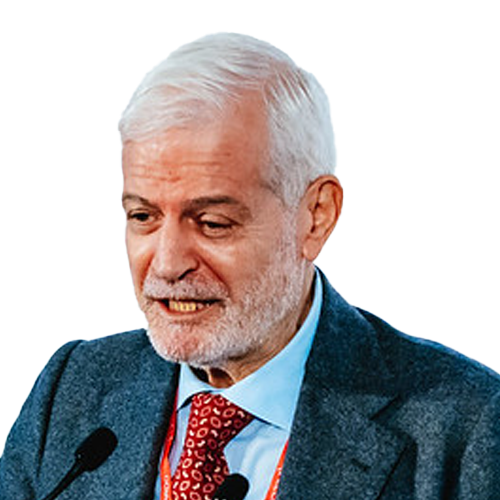
The plenary speech will begin by paying tribute to outstanding Indian scientists, mathematicians, engineers and radar experts—some of whom I am privileged to count among my friends and long-standing collaborators.
My mind goes back to my first trip to Bangalore, for the inaugural Radar Conference (Bangalore, 1983), where I participated by delivering an invited lecture titled “Survey of Data Processing Systems in Netted Radars.” In fact, my acquaintance with scientists working in the field of radar dates back even earlier. Over the years, we have successfully co-authored countless articles.
I would also like to share my experience mentoring a few Indian engineers who were hosted at my office at Selenia S.p.A.—the name by which the company Leonardo was known in the 1980s—as part of a contract to supply radar systems to India. One of these brilliant engineers, upon completing the mentorship period, went on to publish a book on airborne radar systems.
Recently, this collaboration has taken concrete form through lectures delivered at DIET in Pune (India) as part of the HERTZ 2025 workshop (February 24–27, 2025), as well as through online sessions for the HERTZ 2026 edition (December).
Let us now turn to the technical content of my talk. The primary objective of this presentation is to move beyond matrix algebra—which for decades has successfully guided the analysis and design of radar signal and data processing—in favor of a new approach. The current landscape has shifted (characterized by numerous heterogeneous platforms, with agents that may cooperate or, more frequently, compete with one another), and both the environment and the sensors may operate within a non-Euclidean geometry, necessitating a transition to tensor calculus.
The “classical” Kalman filter repeats the complete cycle for each agent/target (m times). The Tensor Kalman Filter (T-KF) estimates the states and associated accuracies of all m agents/targets using measurements from all l sensors in parallel (i.e., at the same time).
With the wise collaboration of a group of PhDs (duly acknowledged in the presentation), I introduce the Tensor Linear Quadratic Gaussian Controller (T-LQG), which allows for the determination of optimal control actions for all m agents/objectives in parallel—that is, simultaneously—based on a cost function defined over N players. In the standard case, Prof. R. Kalman (1960) formulated the duality principle, demonstrating that the optimal control is simply proportional to the state estimate. In the tensor case, this principle remains valid, provided that the standard product is replaced by the Hadamard product (performed element-wise). This is an extraordinary result: Prof. Kalman truly had the foresight to look far into the future.
We have also succeeded in deriving an ambiguity function between agents, accounting for both uncorrelated and correlated measurements. This is a significant new result that surpasses the well-known ambiguity function devised by Dr. P. Woodward.
Furthermore, command and control systems are being developed to reduce the computational time required for control actions in dynamic multi-agent environments.
These problems have been analyzed using John Nash game theory, which studies decision-making among competing rational agents. The pursuer aims to minimize the distance to the evader, whereas the evader seeks to maximize it. The optimal solution is found at the Nash equilibrium, where each agent follows an optimal control policy. Indeed, we propose a tensor-based method to solve N-party pursuer-evader games, with N arbitrarily large. Thus, a novel tensor-based approach is introduced to model and solve N-party pursuer–evader games. We have successfully solved the Isaacs’ equation, which is the extension of the Hamilton- Jacobi-Bellman equation to dynamic games.
The method offers significantly reduced computational time (linear rather than exponential with N) and is well-suited for implementation on hardware for parallel computing (FPGA, GPU, etc.).
We have also tackled the problem of image fusion of multiple sensors across multiple platforms by resorting to Multiscale Kalman Filter (MKF) and revisited it by exploiting the powerful tensor formulation.
Finally, I will examine techniques for mitigating cyber threats. In this context, too, tensor calculus proves to be an invaluable tool. Cybersecurity must be managed within a non-Euclidean realm: in a network, the distance between two nodes—measured in terms of “hops”—differs from physical distance; we are, therefore, operating in a non-Euclidean space. In this regard, the hyperbolic geometry of the Internet is well recognized. We can draw insights from the dynamics of how a virus spreads through a network or from the cyberattacks that target it. Any information system—whether in a military or civilian context—that handles data (such as the information flowing through radar systems) must be certified in terms of information security. Furthermore, the necessary mathematical tools will be briefly reviewed.
I will conclude with two quotations by Leonardo da Vinci. One of his most celebrated works, the Vitruvian Man (Uomo vitruviano), drawn around 1490, symbolizes the ideal proportions of the human body and the harmonious relationship between humanity and the universe. Some key references and acknowledgments will certainly conclude my presentation in the plenary session.
President, Leonardo Radar & Sensors Academy
Selex ES S.p.A., Rome, Italy
Alfonso Farina received the Dr. Ing. degree in Electronic Engineering from the University of Rome La Sapienza, Rome, Italy, and a PhD HC in ICT (Information and Communication Technology) from the University of Palermo, Palermo, Italy. From 1973 to 2014, he worked at Selex ES (Finmeccanica) until he became Senior Vice President (SVP) and Chief Technology Officer (CTO). Currently, he is President of the Leonardo Radar & Sensors Academy and the past President of the Underwater and Sensors Systems of the Leonardo Electronics Division.
Alfonso is a Fellow of IEEE (https://www.ieee.org/) (Institute of Electrical and Electronics Engineers ), IET (https://www.theiet.org/) (Institution of Engineering and Technology), Royal Academy of Engineering (UK), Académico Correspondiente de la Real Academia de Ingeniería de España, European Academy of Science, and National Academy of Engineering (USA). Dr. Farina was a recipient of the Fred Nathanson Memorial Radar Award (1987), Finmeccanica Award for Innovation Technology (2004), IEEE Dennis J. Picard Medal for Radar Technologies and Applications (2010), Oscar Masi Award (2012), IET Achievement Medal (2014), IEEE SPS Industrial Leader Award (2017), Christian Hülsmeyer Award (2019), IEEE AESS Pioneer Award (2020) and the ISIF Yaakov Bar-Shalom Award for a Lifetime of Excellence in Information Fusion (2025). IEEE Italy Section Honorary Award (2025). Von Karman Medal (2026).
His main best paper awards include the M. Barry Carlton of IEEE Transactions on Aerospace and Electronic Systems (2001, 2003, and 2013), the IET Proceedings on Radar Sonar and Navigation (2009–2010), and the International Conference on Fusion (2005).
A multifaceted engineer, scientist, and university professor, he is ranked among the world’s top 2% of scientists and is widely recognized as one of the leading experts in radar systems.